
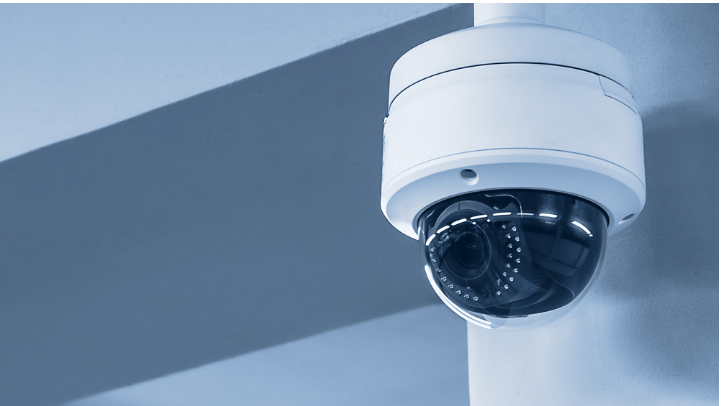
Here is a question for any homeowner thinking about investing in home automation: What role does video surveillance play in the modern smart home environment? Do not answer too quickly. Take some time to think about it. Why? Because the answer is not as simple as it appears.
The precursor to modern home automation is traditional electronic home security. It has been around since the 1970s. Furthermore, video surveillance has been part of home security since its inception. That reality has conditioned us to believe that the role of video surveillance is passive observation. But today’s cameras can do a lot more.
When you step back and fully analyze modern camera technology and its capabilities, you understand that video surveillance can play multiple roles in the smart home:
1. Security Monitoring
The first and most obvious role is security monitoring. In this role, the security cameras you might get with a Vivint Home Security system act as deterrents to crime and a means of gathering evidence when a crime does occur. It is pretty straightforward and easy to understand. But there is more, so let’s move on.
2. Automation Triggering
The best smart cameras on the market today are built with on-board computer vision and AI technologies. They can distinguish between general motion, like leaves blowing across the yard, and people approaching a home. Many can also distinguish clearly between humans and animals. This on-board intelligence gives homeowners opportunities to use their cameras to trigger automation routines:
- Lighting – An exterior camera detecting human motion after the sun goes down can trigger smart lighting to turn floodlights on at 100%. That same camera can trigger walkway lights to gradually illuminate as a homeowner approaches the home.
- Energy Efficiency – Interior cameras can monitor for the presence of human occupants. When no occupancy has been detected for a certain amount of time, they can trigger a thermostat to adjust to a more efficient temperature.
There are more possibilities than I could address in a single post. The point is that modern surveillance cameras can act as sensors to trigger all sorts of routines.
3. Contextual Verification
False alarms have been one of the challenges of home security since the very beginning. They can be so disruptive that municipalities pass false alarm ordinances to encourage consumers to properly maintain their systems. Guess what you can do with a video camera? Utilize its features to verify alerts before triggering an alarm.
A camera capable of distinguishing between your children and your pets can eliminate false alarms when the family dog inadvertently wanders through the path of the interior camera pointing at your front door.
4. Access Control
Video cameras integrated into main entryways can assist homeowners with access control. For example, a video doorbell can alert a homeowner to the fact that his out-of-town guests have arrived. Even though he is at work, he can remotely unlock the door to let them in.
The same technology can be used to reduce package theft. A homeowner can let a delivery driver drop packages in the garage, then close the door behind him when he leaves.
5. Family Safety Monitoring
Interior cameras are great tools for family safety monitoring. Parents can keep an eye on their kids after school. Adult children who see their parents live with them can do the same thing. Video cameras allow homeowners to check in throughout the day.
Video surveillance used to be a strictly passive tool. That is no longer the case. It can be harnessed in multiple ways to enhance home automation capabilities. Why not take advantage of it?