
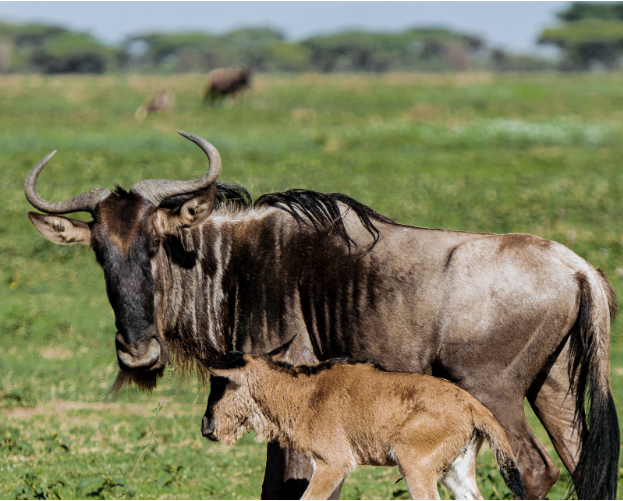
Leave the Indian Ocean at your back and step into the greatest wildlife wilderness on Earth — the Zanzibar to Serengeti safari is Africa’s most iconic dual journey.
Introduction
There is no transition in travel quite like the one from Zanzibar to the Serengeti. One morning you are barefoot on white coral sand, watching the tide pull back across a shallow turquoise lagoon, the air thick with salt and the faint sweetness of cloves. By afternoon, a light aircraft is banking low over a grass airstrip in the middle of the world’s most celebrated wildlife ecosystem, and a land cruiser is already waiting to take you into the golden light of an African evening where lions are beginning to stir.
This journey — from the Indian Ocean archipelago of Zanzibar to the boundless savannahs of the Serengeti — is not merely a change of scenery. It is a passage between two entirely different relationships with the natural world. Zanzibar asks you to slow down, to float, to absorb beauty through sensation. The Serengeti asks you to lean forward, to watch, to be present with an alertness that city life rarely demands. Together, they form a journey that is, in the fullest sense of the word, complete.
The Zanzibar to Serengeti safari has become one of Africa’s most sought-after travel combinations — a pairing recognized by experienced travelers, leading safari operators, and travel editors worldwide as a gold standard of East African adventure. This article is your definitive guide to making that journey well: understanding what each destination offers, how to connect them, when to go, how to structure your time, and what separates an extraordinary experience from a merely adequate one.
Why This Combination Works So Perfectly
The genius of the Zanzibar to Serengeti combination lies in the way each destination amplifies the other. Zanzibar’s beaches and Stone Town provide an unhurried, sensory-rich opening chapter that relaxes the body and quiets the mind — creating the ideal state of receptiveness for the Serengeti’s overwhelming wildlife encounters. Conversely, the emotional intensity of the Serengeti — the predator kills witnessed at dawn, the river crossings that leave you breathless, the sheer scale of the migration stretching to the horizon — makes the return to Zanzibar’s beaches feel like arriving at a place of extraordinary peace.
There is also a deeper cultural coherence to this pairing that rewards attentive travelers. The Swahili civilization that gave Zanzibar its character — built on Indian Ocean trade, on the mingling of African, Arab, and Persian influences — extended its reach far inland. The word safari itself is Swahili, meaning simply “journey.” The Maasai communities that inhabit the lands surrounding the Serengeti have traded with and interacted with coastal cultures for centuries. Traveling between Zanzibar and the Serengeti is not moving between two unrelated destinations — it is following the threads of the same East African tapestry from coast to interior.
Practically speaking, the combination works because Tanzania’s domestic aviation infrastructure makes it genuinely easy. Zanzibar is connected by daily scheduled flights and charter light aircraft services to the Serengeti’s network of bush airstrips, making the physical transition between these two worlds a matter of a few hours rather than days of overland travel.
The Journey: Getting from Zanzibar to the Serengeti
Direct Light Aircraft Connections
The most atmospheric and efficient way to travel from Zanzibar to the Serengeti is by light aircraft — typically a nine to twelve-seat Cessna Caravan operated by Coastal Aviation, Auric Air, ZanAir, or Air Excel. These carriers operate scheduled and charter services connecting Zanzibar’s Abeid Amani Karume International Airport with multiple Serengeti bush airstrips, including:
- Seronera Airstrip — Central Serengeti, ideal for year-round game viewing
- Kogatende Airstrip — Northern Serengeti, the epicenter of Mara River crossing season (August–October)
- Grumeti Airstrip — Western Corridor, western river crossings (June–July)
- Lamai Airstrip — Northern Serengeti, exclusive wilderness area
- Ndutu Airstrip — Southern Serengeti/Ngorongoro border, calving season base (January–March)
Direct flight time from Zanzibar to central Serengeti airstrips ranges from approximately 2 hours to 3.5 hours depending on routing and intermediate stops. The approach over the Serengeti in a light aircraft — low enough to see herds of wildebeest below, landing on a grass strip with acacia trees at the runway’s edge — is itself one of East Africa’s great travel experiences.
Via Kilimanjaro International Airport
Travelers preferring scheduled commercial services can fly from Zanzibar to Kilimanjaro International Airport (KIA) on daily Precision Air or Air Tanzania connections — a flight of approximately 1 hour 20 minutes. From KIA, domestic carriers connect to Serengeti airstrips, or road transfers can be arranged through Arusha for those wishing to incorporate the northern Tanzania highlands scenery into their journey. Total travel time via this routing is typically 4 to 6 hours.
The Serengeti: What Awaits You
An Ecosystem Without Equal
The Serengeti National Park covers 14,763 square kilometers of northern Tanzania, extending northward across the Kenyan border into the Maasai Mara to form a continuous protected ecosystem exceeding 30,000 square kilometers. The name derives from the Maa language spoken by the Maasai — siringet, “the place where the land runs on forever” — and standing on a kopje in the central Serengeti at sunrise, with the plains extending to every horizon without a single manmade structure in view, the accuracy of that description is self-evident.
The Serengeti’s fame rests on three pillars: the extraordinary density and diversity of its resident wildlife populations, the Great Migration, and the quality of predator-prey interactions that this combination of circumstances produces. Few places on Earth allow visitors to witness the full drama of ecosystem dynamics — birth, death, predation, competition, cooperation — playing out with such frequency, accessibility, and raw power.
The Great Migration: Earth’s Greatest Wildlife Spectacle
The Great Migration is the annual movement of over 1.5 million wildebeest, 700,000 zebras, and 500,000 Thomson’s gazelles in a continuous, clockwise loop through the Serengeti-Mara ecosystem — driven by rainfall, grass availability, and the ancient migratory instincts encoded into these animals over hundreds of thousands of years.
The migration is not a single event but a year-round phenomenon with dramatically different characters in different seasons and locations:
Southern Serengeti — Calving Season (January–March): The vast wildebeest herds gather on the nutrient-rich short-grass plains of the southern Serengeti and Ndutu area. From late January through February, approximately 500,000 calves are born within a concentrated six-week window — a synchronized biological strategy that overwhelms predators through sheer numerical abundance. The calving plains represent one of the most emotionally overwhelming wildlife spectacles available anywhere: the tender vulnerability of newborn calves set against the constant, circling attention of cheetah, lion, hyena, wild dog, and jackal. For wildlife photographers, this season is unparalleled.
Western Corridor — Grumeti River Crossings (June–July): As the dry season begins, the herds begin their northward push through the western corridor, encountering the Grumeti River — home to enormous, ancient Nile crocodiles. Crossings here are less publicized than the Mara River events but are frequently as dramatic and dramatically less crowded, offering intimate wildlife viewing that the northern Serengeti’s high season cannot always provide.
Northern Serengeti — Mara River Crossings (August–October): The migration’s most cinematic and celebrated phase. Columns of wildebeest and zebra stretch for kilometers across the northern plains, gathering at the Mara River’s banks in their tens of thousands before instinct overcomes hesitation and the crossing begins. Crocodiles surge. Animals scramble. Some make it; some do not. The Mara River crossings are wildlife drama at its most primal, most elemental, and most unforgettable. For many visitors, witnessing a Mara crossing is the single most powerful wildlife experience of their lives.
Central and Southern Serengeti — Short Rains Return (November–December): The short rains bring fresh grass to the southern plains and the herds begin their return migration southward. This shoulder season offers excellent game viewing, dramatically reduced visitor numbers, lush green landscapes, and some of the finest photographic light of the year.
Resident Wildlife Beyond the Migration
Even in the absence of migration herds, the Serengeti delivers wildlife encounters of extraordinary quality through its resident populations. The Seronera Valley in the central park is Africa’s finest year-round predator corridor — resident lion prides, leopard visible in the sausage trees along river courses, and cheetah mothers raising cubs on the open plains. Elephant, giraffe, hippo, crocodile, hyena, wild dog, and over 500 bird species complete a biodiversity picture of unrivaled richness.
Choosing Your Serengeti Camp
The accommodation landscape within the Serengeti reflects the full spectrum of safari philosophy and budget:
Ultra-Luxury Lodges and Camps: Properties such as Four Seasons Serengeti, Singita Sasakwa, &Beyond Serengeti Under Canvas, and Nomad Tanzania’s Serengeti Bush Camp set the global benchmark for wilderness luxury. These properties combine architecturally extraordinary accommodation, Michelin-caliber dining, and deeply experienced naturalist guides with exclusive, uncrowded game-drive areas. For travelers arriving from Zanzibar’s finest beach hotels, the transition in comfort level is seamless.
Classic Tented Camps: The original safari experience — canvas walls, the sounds of the bush at night, simple but elegant comfort. Many of Tanzania’s best classic camps offer wildlife encounters equal to the luxury properties at significantly lower cost, with guides of equal caliber and game-drive areas of equal quality.
Mobile Migration Camps: Seasonal camps that physically relocate to remain in the migration’s path offer the most immersive possible experience — a small number of tents set precisely where the greatest wildlife spectacle on Earth is currently unfolding. Availability is limited and demand is high; book 12 months in advance for peak migration season.
Structuring Your Zanzibar to Serengeti Itinerary
7-Night Essential Journey
Days 1–2: Zanzibar — Arrive, Stone Town exploration, beach at Nungwi or Paje, sunset dhow cruise. Day 3: Travel Day — Morning flight Zanzibar to Serengeti (direct light aircraft or via KIA). Afternoon game drive from camp. Days 4–6: Serengeti — Full morning and afternoon game drives. Sundowners on the plains. Night sounds from the tent. Day 7: Depart — Pre-dawn game drive, mid-morning flight out.
10-Night Northern Circuit Complete Experience
Days 1–3: Zanzibar — Beach, culture, diving or snorkeling. Day 4: Travel — Fly to Kilimanjaro, overnight Arusha. Days 5–6: Tarangire National Park — Elephant herds, ancient baobabs. Day 7: Ngorongoro Crater — Big Five full day crater drive. Days 8–10: Serengeti — Migration game viewing, three full drive days. Return via KIA or back to Zanzibar
5-Night Quick Escape
Days 1–2: Zanzibar — Beach recovery, Stone Town half-day. Day 3: Travel — Direct light aircraft Zanzibar to Serengeti. Days 3–5: Serengeti — Intensive three-night game-viewing focus. Day 5: Return to Zanzibar or depart international
Best Time to Travel Zanzibar to Serengeti
Zanzibar is pleasant year-round, with the principal consideration being the long rains (March–May) when beach conditions deteriorate and some water sports operators close. The Serengeti’s optimal periods are closely tied to migration positioning.
For the combined Zanzibar to Serengeti journey, January and February represent an exceptional sweet spot — Zanzibar enjoys its finest beach weather during the northeast monsoon dry period, while the southern Serengeti’s calving season is at its dramatic peak. June through October delivers reliable dry-season game viewing across the Serengeti with some of Zanzibar’s most pleasant diving visibility, particularly in June–July before the southeast monsoon peaks.
Key Takeaways
- The Zanzibar to Serengeti safari is one of East Africa’s most celebrated travel combinations, pairing Indian Ocean beach paradise with the world’s greatest wildlife ecosystem in a journey of profound contrasts.
- Direct light aircraft connections from Zanzibar reach multiple Serengeti airstrips in 2 to 3.5 hours — making the transition between ocean and savannah among the most efficient in adventure travel.
- The Great Migration — 1.5 million wildebeest plus hundreds of thousands of zebra and gazelle — moves continuously through the Serengeti and can be witnessed in dramatically different forms in every season.
- The calving season (January–February) in the southern Serengeti and Mara River crossings (August–October) in the north are the migration’s most dramatic phases and should anchor timing decisions.
- The Seronera Valley delivers reliable year-round predator viewing with resident lion prides, leopard, and cheetah even outside migration season.
- Mobile migration camps offer the most immersive Serengeti experience but require booking 12 months in advance for peak season availability.
- January–February and June–October are the optimal periods for combining Zanzibar beach conditions with peak Serengeti game viewing.
- A minimum of 4 full game-drive days in the Serengeti is recommended; 5 to 6 days allows meaningful exploration of multiple ecosystem zones.
- The journey works best when Zanzibar precedes the Serengeti, using beach relaxation to prepare the mind for the intensity of the wildlife experience.
- Always use a TATO-accredited operator with demonstrable Serengeti expertise — guide quality is the single most significant variable in safari experience quality.
Questions & Answers
Q: What is the most direct route from Zanzibar to the Serengeti? The most direct option is a light aircraft charter or scheduled service flying directly from Zanzibar’s Abeid Amani Karume International Airport to a Serengeti bush airstrip — most commonly Seronera (central Serengeti) or Kogatende (northern Serengeti). Carriers including Coastal Aviation and Auric Air operate these connections with journey times of approximately 2 to 3.5 hours. An alternative route through Kilimanjaro International Airport, adding transit time but offering more scheduling flexibility on commercial carriers.
Q: How should I decide which part of the Serengeti to visit based on my travel dates? Migration positioning should guide camp selection. January through March: book southern Serengeti camps near Ndutu for calving season. June through July: western corridor camps for Grumeti River crossings. August through October: northern Serengeti camps near Kogatende or Lamai for Mara River crossings. November through December: central Serengeti camps offer excellent resident wildlife as the herds begin returning south. Your operator should actively assist with positioning decisions based on confirmed travel dates.
Q: Is the Zanzibar to Serengeti journey suitable for honeymooners? The combination is among the world’s most popular honeymoon itineraries, and for excellent reason. Zanzibar offers romantic beach settings, candlelit seafood dinners on the sand, and historic Stone Town exploration. The Serengeti adds the shared intimacy of extraordinary wildlife encounters, sundowner cocktails on the open plains, and nights spent listening to lions calling across the darkness from a luxury tented camp. Several Serengeti properties offer dedicated honeymoon suites and private game-drive vehicles for couples. Few honeymoon combinations anywhere in the world rival this pairing in emotional richness.
Q: How much does a Zanzibar to Serengeti safari typically cost? Costs vary dramatically by accommodation standard, season, and itinerary length. A mid-range 7-night combination (3 nights Zanzibar, 4 nights Serengeti) including flights typically ranges from USD 4,000 to USD 7,000 per person. Luxury combinations at premium lodges and camps for the same duration can range from USD 10,000 to USD 25,000 per person or more. Green season travel (March–May) offers the most significant discounts — some properties reduce rates by 30 to 40 percent. Park fees, currently set at USD 70 per person per day for the Serengeti, are included in most all-inclusive packages.
Q: What wildlife can I expect to see in the Serengeti if I visit outside the main migration season? The Serengeti’s resident wildlife populations deliver outstanding year-round game viewing entirely independent of migration timing. Lion, leopard, cheetah, elephant, giraffe, hippo, crocodile, hyena, Cape buffalo, wild dog, and over 500 bird species are present throughout the year. The Seronera Valley in the central Serengeti is widely regarded as Africa’s finest year-round predator viewing area, with resident prides and habituated leopards providing reliable sightings on almost every drive. No visit to the Serengeti, regardless of season, produces a disappointing wildlife experience.
Q: Do I need travel insurance for a Zanzibar to Serengeti safari? Comprehensive travel insurance including medical evacuation coverage is not merely recommended — it is essential. The Serengeti’s remote location means that serious medical incidents require helicopter or light aircraft evacuation to Arusha or Nairobi, with costs potentially exceeding USD 20,000 without insurance coverage. Policies should specifically include emergency medical evacuation, trip cancellation, and baggage loss. Flying Doctors Society of Africa (AMREF) membership is additionally recommended by many operators as supplementary evacuation coverage during the safari portion of your journey.
Conclusion
Every great journey has a moment at which its character is fully revealed — a moment when you understand, with sudden and complete clarity, exactly why you came. On the Zanzibar to Serengeti safari, that moment arrives differently for every traveler.
For some, it comes at dusk on the first evening in camp, when the generator goes quiet and the African night swells around the tent — the distant bark of a zebra, the hyena’s ascending whoop carrying across the dark plains, the sky above burning with more stars than any city-dweller can quite believe are real. For others, it comes mid-morning on the third day, when your vehicle crests a rise and the migration is simply there — thousands of wildebeest stretching to the horizon in every direction, dust rising from their passage, the air vibrating with the sound of hooves on dry earth.
But perhaps the most quietly transformative moment comes at the end, when you are back in Zanzibar — salt water on your skin again, a cold drink in hand, the Indian Ocean turning pink in the evening light — and you find yourself turning over in your mind everything you witnessed in the Serengeti, organizing it, trying to make sense of its scale and beauty and violence and grace. The ocean in front of you is ancient. The plains you have just left are older still. And you, small and fortunate and briefly alive within both, carry something back from this journey that is genuinely difficult to name but impossible to forget.
That is what the Zanzibar to Serengeti safari gives you. Plan it carefully, take your time, and let it change you.